How First Responders Use Drones: Why Testing Matters
As drone technology becomes more advanced and reliable, the use of drones by first responders has become more prevalent. From initial assessments of threatening situations, ensuring emergency response teams arrive as quickly as possible, to surveying traffic collisions and site evaluations, drones help law enforcement and first responders assess situations faster, cover more ground, and reduce the risk to ER personnel.
As with any new resource that enters the field, there is the question of governance and safe application. In other words, while drone technology has advanced considerably in recent years, commercial use, particularly in the emergency sector, must consider whether the advantages of using this technology outweigh the risks of navigating safety standards that are still in the emergent stages.
The need for formal, repeatable Unmanned Aerial Vehicles (UAV) testing protocols is becoming more urgent for agencies deploying drones in densely populated areas and for manufacturers creating new models. At Biokinetics, we understand this urgency and are pleased to offer leading assessment testing for drones and contribute to efforts to create standardized measures of compliance.
Below, we’ll discuss first responders’ use of UAVs and the importance of dependable regulation. Read on to learn more.
From Novelty to Necessity
What started as experimental pilot programs has quickly become an operational reality for many departments across North America. Within Canada, for example, the Alberta RCMP has significantly expanded its drone fleet to support daily calls for service, including locating missing persons, monitoring dangerous situations, and providing live aerial feedback to officers on the ground.
Similar programs are taking shape across the rest of the continent; Skydio, FlytBase, and other drone platform developers are actively enabling “drones as first responders,” (DFR) including Beyond Visual Line of Sight (BVLOS) operations where a drone can be deployed remotely before human responders arrive. These applications offer real-time situational awareness and can be exceptionally beneficial on the ground, but they also raise serious public safety and accountability questions.
For example, what happens when a drone experiences mechanical failure near a crowded roadway? How do agencies ensure that autonomous or semi-autonomous flight paths pose minimal risk to bystanders? Software alone can’t answer these questions, meaning that we must continue to focus on developing and enforcing reliable testing standards.
Creating a Way Forward with Regulation and Testing
Transport Canada has indicated new regulations are on the horizon for UAV operation, particularly in scenarios that push beyond traditional line-of-sight controls. In the U.S., similar updates are being discussed around UAV safety certifications, urban deployment zones, and acceptable levels of risk. As of Q3 in 2025, technological developments are still exceeding regulatory standards, a common industry challenge that has yet to be overcome.
This gap between evolution and safety standards puts pressure on agencies, manufacturers, and even insurance stakeholders to validate their own risk levels. With usage on the rise in front-line scenarios like emergency response, it’s no longer enough to say a drone has a “low” probability of failure. Safety must be demonstrably tested under real-world conditions, including:
- Impact energy from various altitudes and incidence angles.
- Kinetic threat assessments in public spaces.
- Injury biomechanics based on potential collisions with people.
- Assessment of impact severity with structural assets.
Dependable testing by an experienced team like Biokinetics is essential for driving this effort forward and creating standards that protect everyone’s best interests.
What Drone Testing Looks Like
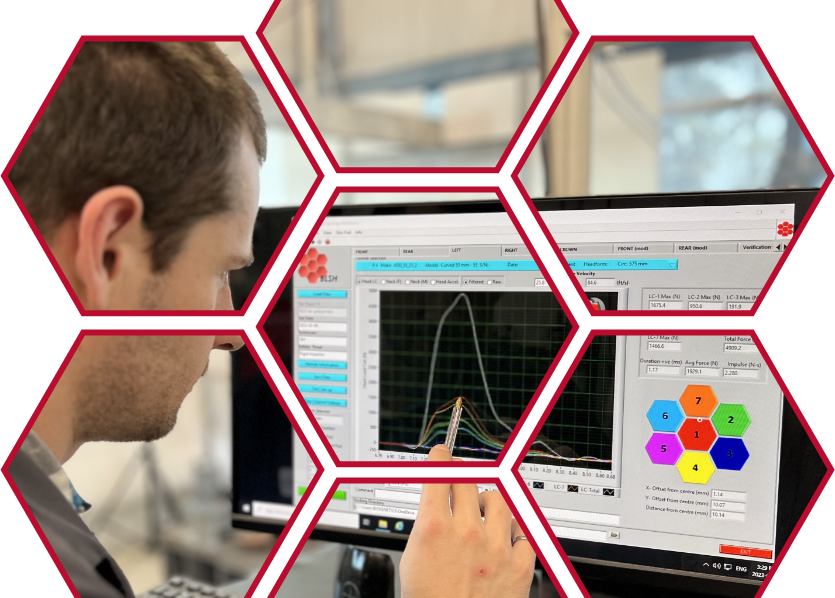
At Biokinetics, drone safety testing isn’t just about running tests. It’s about quantifying how real-world impact forces translate into injury risks and creating set standards that help ensure safety. Our team brings decades of experience and industry-leading test facilities to each assessment, making it possible to assess the energy profile of drones under various operating conditions—weight, speed, descent angle, and more. This data helps reveal the effects on standardized human surrogates or protective systems and aids in determining:
- What level of injury could occur in a ground strike.
- What constitutes an acceptable risk threshold for public deployment.
- How design choices, like compliant materials, propeller guards and deflectors affect impact severity.
By replicating UAV-to-human interactions the same way we test helmets, body armour, or blunt impact systems, Biokinetics can help manufacturers and agencies better understand critical risks associated with drone operation before they happen in the field.
Safer Skies Start Here
As public safety agencies continue to adopt drone programs, the urgency of proper testing grows. As the industry rallies to create a standardized approach to regulation, we must remain aware that the responsibility to validate safety lies with those who design, deploy, and approve UAV systems today.
Biokinetics offers full-service drone testing solutions at our state-of-the-art Drone Safety Lab (DSL) for impact analysis, public risk assessment, and UAV-human interaction modelling. Contact us today to learn more!