Reasons Why BLSH Improves Testing for Military Helmets
Head protection remains one of the most critical challenges in preventing injuries in the military. While today’s helmets have come a long way from previous designs, penetration isn’t the only concern wearers may encounter in the field. In fact, serious injury can still occur without penetration of the helmet’s external shell. Blunt loading, deformation, and energy transfer can result in traumatic brain injury, skull fracture, or long-term neurological effects that hinder quality-of-life.
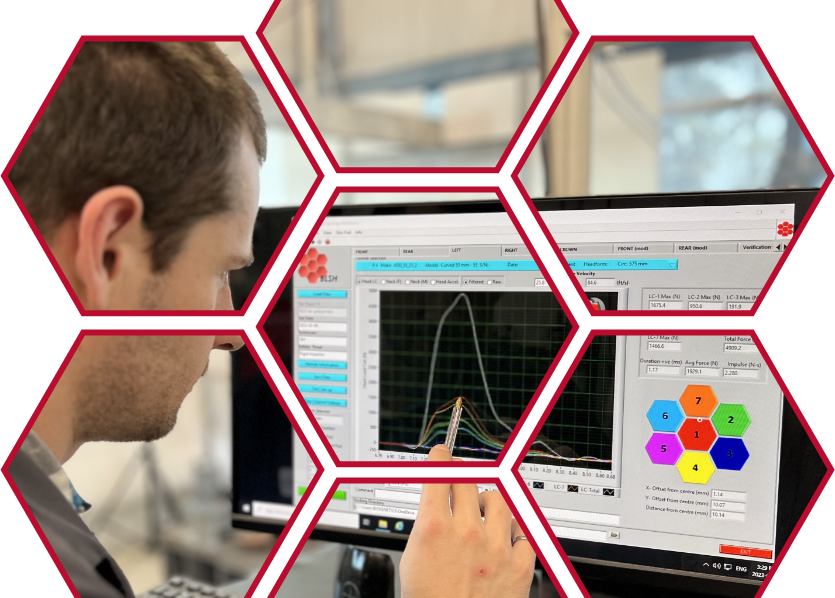
Biokinetics has been involved in the development of the Ballistic Load Sensing Headforms (BLSH) over a period of almost 30 years and yet, after this time, it still plays a crucial role in enhancing our understanding of human risks in law enforcement and military operations by providing a deeper, biomechanics-based understanding of how helmets perform under realistic threat conditions. With the dynamic measurement of the forces imparted to the skull from the deforming ballistic shell, an assessment of behind helmet blunt truama can be obtained.
At Biokinetics, we’re proud to offer leading testing services, alongside access to world-class laboratories and a team that brings decades of experience to the table. We understand that the BLSH is crucial for understanding the potential impact of a sudden event on a human head, and we provide comprehensive testing services with the BLSH to help clients ensure their protective headgear meets all current standards for optimal safety. Learn more below!
Why Traditional Helmet Testing Isn’t Always Enough
While we have a decent understanding of how today’s helmets perform “in the arena,” the reality is that conventional ballistic helmet testing focuses primarily on penetration resistance. While this remains essential, the results do not fully capture the injury risks associated with non-penetrating impacts.
In real-world scenarios, helmets can experience:
- Significant shell deformation without perforation
- High-energy blunt loading from ballistic threats
- Localized loading that transmits forces to the skull
- Repeated or combined impact events
In cases like these, penetration isn’t your main risk factor. Injury is far more likely to be caused by one of these scenarios depending on how the forces are distributed and absorbed. Without appropriate instrumentation, these effects can be nearly impossible to quantify, leaving wearers at risk of subpar protection when it matters most.
What Is a Ballistic Load Sensing Headform (BLSH)?
A Ballistic Load Sensing Headform is an advanced, instrumented surrogate designed to measure how ballistic and blunt forces are transmitted through a helmet to the head. Unlike ballistic clay based headforms, BLSH systems capture dynamic load data that can be correlated to injury risk.
Key capabilities include:
- Measurement of localized and global load transmission during the whole impact event
- Insight into helmet deformation and load paths
- Repeatable and reproducible controlled testing under ballistic impact conditions
- Data that supports injury-focused performance evaluation
By capturing the dynamic interactions with the BLSH, engineers and researchers can move beyond surface-level performance metrics and study the exact nature of an incoming risk.
The Role of Biomechanics in Interpreting BLSH Data
Collecting data is only part of forming a comprehensive understanding of risk. Interpreting metrics is crucial to determining human injury thresholds and it is essential to partner with an experienced team to do so. Biokinetics applies decades of research in head injury biomechanics to interpret BLSH results within the context of:
- Skull and brain response to loading
- Injury thresholds and risk metrics
- Realistic operational scenarios
- Cross-domain insights from military, law enforcement, transportation and sports research…and more!
This level of hands-on knowledge ensures that BLSH testing informs meaningful safety decisions, not just technical reports for shareholders.
How Biokinetics Uses BLSH in Injury Prevention Research
Biokinetics brings decades of experience to developing new test methods and is proud to help advance injury assessment research. BLSH systems are used as part of a broader testing and research framework across government, academia and industry that includes:
- Ballistic and blunt trauma testing
- High-speed impact analysis
- Standards development and validation
- Consulting support for users, manufacturers, researchers and government agencies
By integrating BLSH into this framework, Biokinetics helps clients understand not only whether a helmet meets requirements, but how it protects the human head under realistic threats.
Making an Impact on Head Injury Prevention
Head injuries remain a leading cause of serious harm in military environments. Reducing that risk requires tools and methods that reflect how injuries actually occur and address evolving threats.
At Biokinetics, BLSH testing is just one of many ways we apply biomechanics, engineering, and research to advance human safety. Learn more about our testing services by contacting our team today.