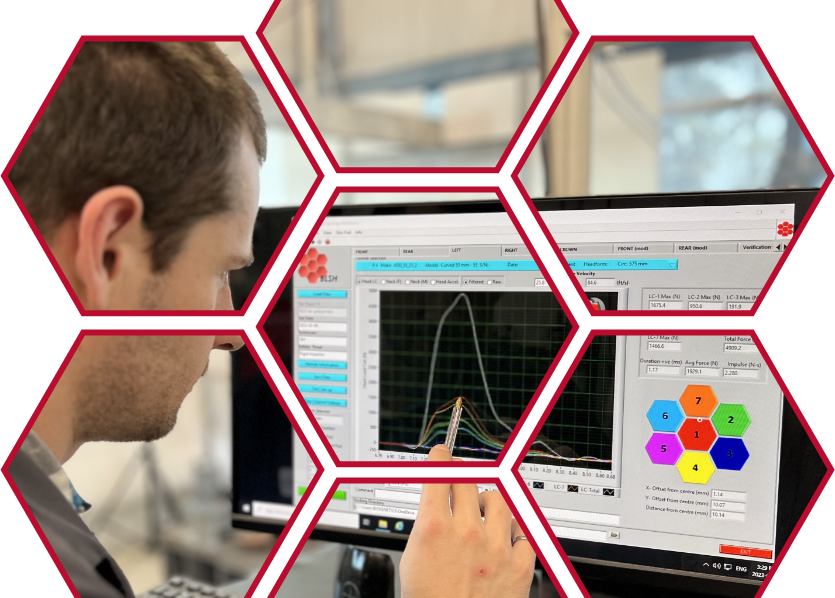
Why Trauma Testing Is Vital For Better Modern Military Equipment
Blunt trauma remains one of the most serious and complex injury mechanisms faced by military personnel. Even when armour successfully prevents penetration, the kinetic transfer of energy can often cause severe internal injuries, long-term disabilities, or even death.
With modern threats increasing the risks associated with energy transfer due to their complexity, blunt force trauma testing is a crucial component in assessing the protective equipment of military and law enforcement personnel. Biokinetics has spent over three decades studying the effects of blunt trauma, helping military organizations and manufacturers understand not just whether armour stops a threat, but what happens to the human body when it does. Learn more below.
Understanding Blunt Trauma in a Military Context
Blunt trauma occurs when blunt forces are transmitted through protective equipment into the body, but unlike penetration injuries, these effects can be less visible but are equally dangerous.
Common blunt trauma concerns include:
- Thoracic and abdominal injuries
- Behind-armour blunt trauma (BABT)
- Behind helmet blunt trauma
- Head and neck loading
- Organ displacement and tissue damage
As modern weapons evolve with higher energy munitions, even high-performing armour can transmit significant energy to the body, making blunt trauma evaluation essential.
Why New Threats Demand Updated Testing Approaches
Emerging global threats have raised the bar for protective performance. Higher-energy munitions, novel projectile designs, and increased engagement distances all contribute to greater impact loads on armour systems.
In response, military organizations are increasingly focused on:
- Injury risk rather than penetration alone
- Performance under worst-case scenarios
- Adaptability to evolving threat profiles
Traditional test methods provide some support, but struggle to fully capture these risks, making advanced blunt trauma testing crucial to ensure maximum end-user survivability and the lowest risk threshold possible.
The Importance of Standardization and Regulation
Standardized blunt trauma testing ensures consistency across products and programs. Without it, comparing performance between systems becomes difficult and unreliable, leaving users at risk.
Effective standardization supports:
- Fair procurement decisions
- Repeatable, defensible test results
- Alignment between manufacturers and end-users
- Continuous improvement of protective equipment
Biokinetics is proud to contribute to the development and refinement of blunt trauma standards used by military and law enforcement agencies worldwide by providing reliable, repeatable data you can trust when it matters most.
Interim Solutions and Retrofit Strategies
Interim retrofit solutions, such as trauma packs, can improve blunt impact performance when properly designed and validated. To ensure effectiveness, however, rigorous testing is crucial. Without proper statistics and standards, there is a risk of a false sense of security that can introduce new injury risks and leave wearers more vulnerable.
Biokinetics supports the evaluation of both new designs and retrofit solutions, ensuring performance improvements are tangible and measurable.
How Blunt Trauma Testing Is Performed
Advanced blunt trauma testing relies on biomechanically informed methodologies, including:
- Instrumented surrogates that mimic human response
- High-speed data acquisition
- Repeatable impact conditions
- Injury metrics tied to real-world outcomes
These methods allow engineers to assess how energy is distributed through armour and into the body, providing insight beyond simple deformation measurements.
Protecting Personnel Through Better Testing
As threats continue to evolve, blunt trauma testing ensures protective equipment evolves with them. When injury risk is properly understood and mitigated, armour systems do more than meet specifications—they save lives.
At Biokinetics, blunt trauma testing is integral to our broader mission: making a positive impact on human safety through rigorous science, validated methods, and a commitment to injury prevention.
Learn more about our blunt trauma testing capabilities by contacting our team today.